Key takeaways
Fill, sign, and submit Vehicle Bill of Sale from any browser — or have AI generate a custom version in seconds. No installs, no printing, no back-and-forth.
- The Bill of Sale Form is a legal document recording the transfer of personal property ownership from a seller to a buyer.
- Both the buyer and seller must sign the document to acknowledge the transaction terms and the transfer of ownership.
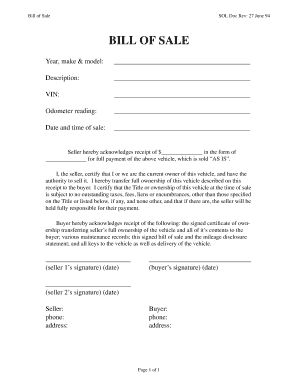
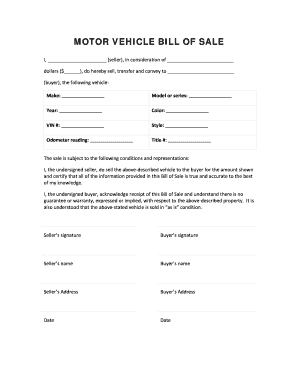
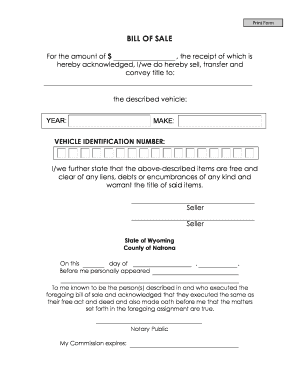
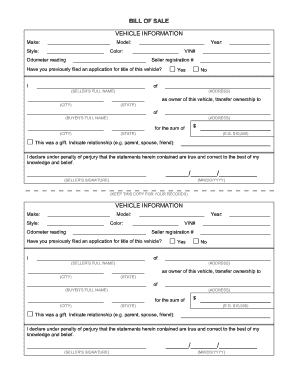
- The form requires specific vehicle details including the make, model, year, vehicle identification number, and current odometer reading.
- The document must include the full names and addresses of both parties, the agreed sale price, and the transaction date.
- While the form itself has no filing deadline, it is essential for state-mandated vehicle registration and title transfer processes.
- This document serves as permanent proof of purchase and is often required by state agencies to update official ownership records.
What is Vehicle Bill of Sale?
Bill of Sale Form is a legal document used to record the transfer of ownership of personal property, such as a vehicle, from a seller to a buyer while documenting the specific terms of the sale. This record serves as essential proof of the transaction for both parties involved in a private sale. While it often functions as a general legal document for various personal items, it is most commonly associated with transactions requiring official record-keeping, such as vehicle title transfers.
This bill of sale document captures critical details about the property and the transaction participants to ensure accurate record-keeping. It identifies the buyer and seller by their full names and addresses and includes specific vehicle information like the make, model, year, and vehicle identification number. Additionally, it records the agreed-upon selling price, the date of the sale, and the odometer reading at the time of transfer. Both the seller and buyer must sign the form to attest to the accuracy of these details.
The issuing authority varies by jurisdiction; it is commonly issued by state Departments of Motor Vehicles (DMVs) or equivalent agencies for vehicle transactions, or it functions as a general legal document for private sales.
Who needs the Vehicle Bill of Sale — and who doesn't
Not everyone files Vehicle Bill of Sale. The checklist below tells you whether it applies to your situation — and points you to the right alternative if it doesn't.
You need this Vehicle Bill of Sale if…
- you are a seller or buyer involved in the private sale of personal property such as a motor vehicle
- you need to provide official proof of a transaction for vehicle title transfers and registration with state Departments of Motor Vehicles
- you are documenting the specific terms of a sale including the vehicle identification number, odometer reading, and selling price
- you require a signed record to attest to the accuracy of the information and agreement between both parties
- you are conducting a transaction that requires official record-keeping for personal legal documentation
You do not need this Vehicle Bill of Sale if…
- the transaction does not involve the transfer of personal property or vehicles between private entities
- you are not required to provide proof of ownership transfer to a state agency or Department of Motor Vehicles
- the transfer of ownership is being handled through a different legal process that does not require a bill of sale
Why you need the Vehicle Bill of Sale
Why people fill out Vehicle Bill of Sale, and what tends to go wrong when they don't.
-
Establish Legal Ownership The Bill of Sale Form serves as a legal record for the transfer of personal property. It provides necessary proof of ownership for official tasks like vehicle registration and title transfer.
-
Document Sale Specifics This document captures critical details including the vehicle identification number, odometer reading, and sale price. Recording these facts helps prevent future disputes regarding the condition or terms of the property sale.
-
Verify Mutual Agreement Both the seller and buyer must sign the document to acknowledge the terms of the sale. These signatures provide formal evidence that both parties consent to the transfer of ownership.
-
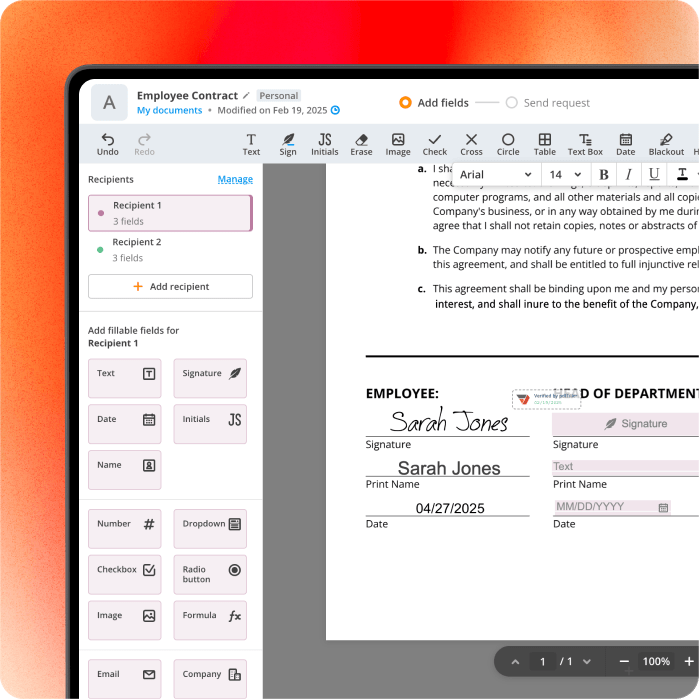
Easily Sign Online Manage your paperwork efficiently by using pdfFiller to fill and edit the document in your browser. You can add a legally binding e-signature and share the finished PDF via link.
Vehicle Bill of Sale vs. similar documents
Vehicle Bill of Sale gets mixed up with similar documents more than most. Here's how to tell them apart, and what filing the wrong one actually costs.
| Comparison criteria | Bill of Sale Form | Certificate of Title | Vehicle Registration Application |
|---|---|---|---|
| Purpose | Record ownership via bill of sale for car. | Formally establishes legal ownership of a vehicle. | Used to register vehicle with state DMV. |
| When to use | During a private sale or vehicle transaction. | Transferred with the bill of sale for vehicle. | When buyer registers a newly acquired vehicle. |
| Signatures required | Signed by both the seller and buyer. | Not specified in provided source material. | Not specified in provided source material. |
| Filing | Supporting document for registration and title transfer. | Transferred between parties during the sale. | Submitted to the state DMV by buyer. |
| Governing reference | State contract law and Uniform Commercial Code. | Not specified in provided source material. | Not specified in provided source material. |
What each section of Vehicle Bill of Sale means
Every section explained — what it's asking, the records you'll need on hand, and the mistakes that most often cause a rejection or follow-up request.
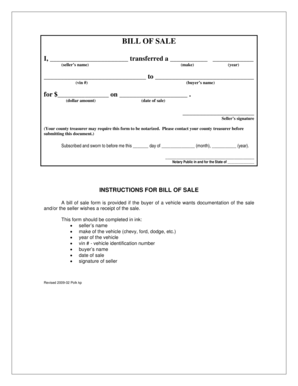
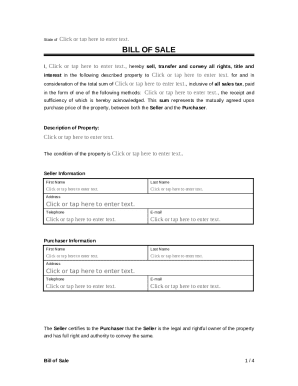
| Detailed Vehicle Information | Enter the specific details of the vehicle being sold, such as the year, make, model, VIN, current odometer reading, body type, and exterior color. |
|---|---|
| Seller Identification Details | Provide the full legal name and complete mailing address of the individual or business entity that is selling the personal property to the buyer. |
| Buyer Identification Details | Input the full legal name and current address of the person or organization who is purchasing the property and assuming ownership from the seller. |
| Sale Price and Date | Specify the calendar date on which the transaction took place and the total agreed-upon purchase price paid for the vehicle or personal property. |
| Authorized Party Signatures | Both the buyer and seller must provide their signatures to confirm the accuracy of the recorded information and to finalize the transfer of ownership. |
How to fill out Vehicle Bill of Sale using pdfFiller
A walkthrough from the first field to the signature line. With your records in front of you, most people finish in under ten minutes.
-
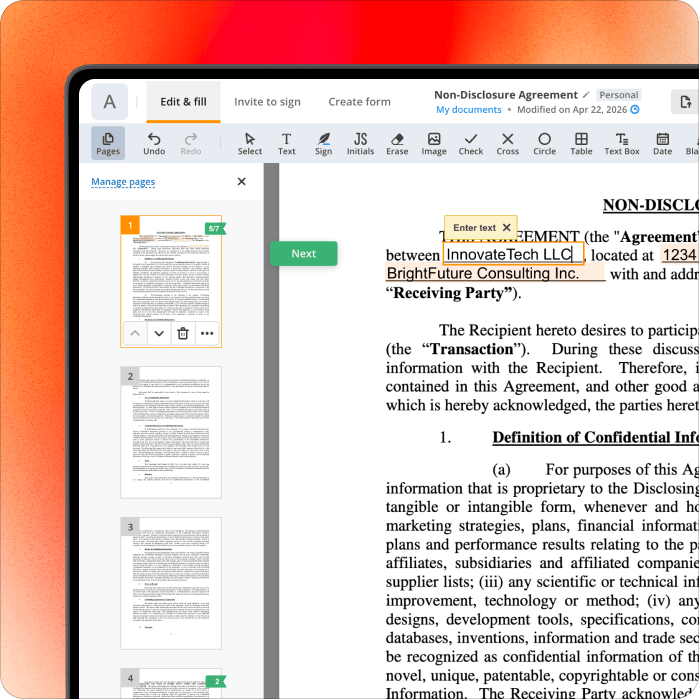
Open the Document Click Get Form to open Bill of Sale Form in the pdfFiller editor to begin customizing your document with the platform's intuitive online editing tools.
-
Enter Vehicle Details Click on the Vehicle Information fields to type the make, year, model, VIN, and odometer reading into your bill of sale template for accurate property identification.
-
Identify the Seller Input the seller's full name and current address in the Seller Information section, ensuring the details match official identification for a valid transfer of ownership.
-
Identify the Buyer Navigate to the Buyer Information section and fill in the purchaser's full name and address to document who is receiving the property in the bill of sale pdf.
-
Detail Sale Terms Select the date of sale using the calendar tool and enter the final agreed-upon purchase price in the Sale Information section to record the financial transaction details.
-
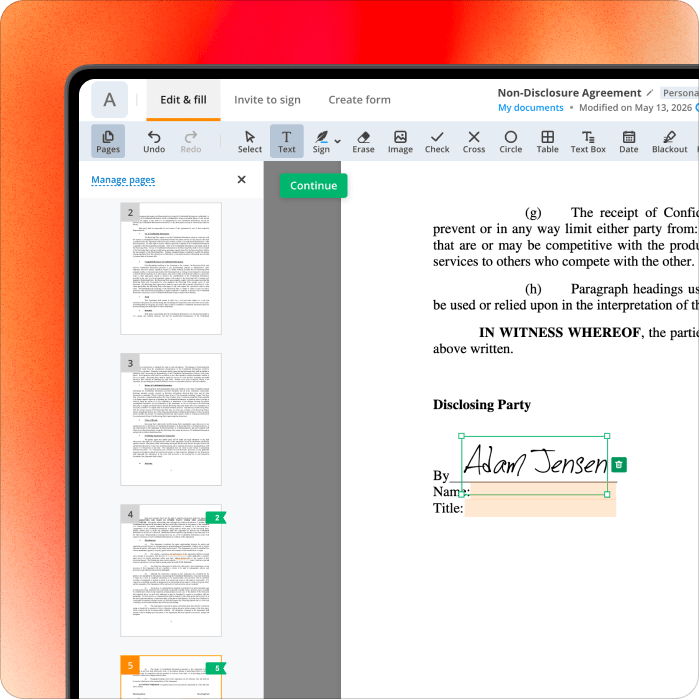
Add Required Signatures Use the Sign tool to create and place a legally binding eSignature for both the seller and buyer, attesting to the accuracy of the information in the document.
-
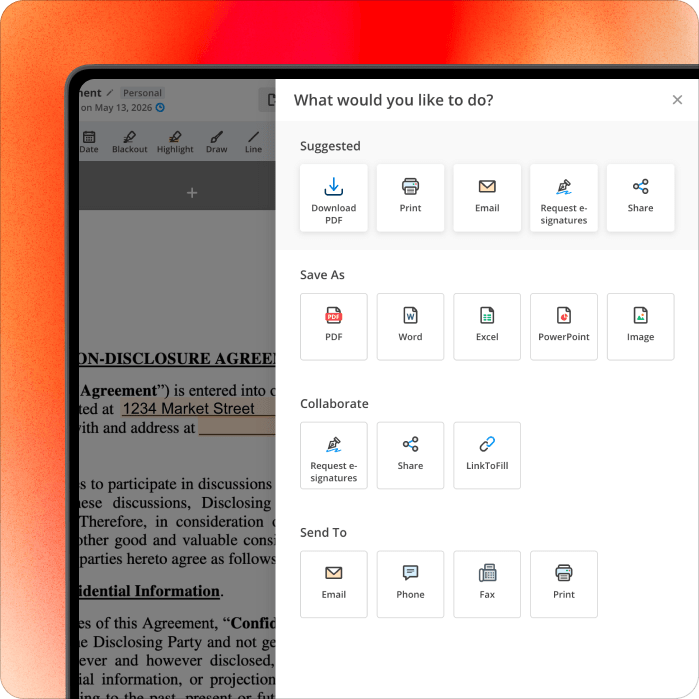
Send or Share Click Done to save your changes, then choose to send the completed form by email, share it via a secure link, or fax it directly to the relevant parties.
Required disclosures & attachments
The fields Vehicle Bill of Sale won't be accepted without — and the disclosures filers most often miss.
Deadlines, key dates & penalties for Vehicle Bill of Sale
When Vehicle Bill of Sale is due, what late filing actually costs, and how to request more time if you need it.
| Filing and Registration Deadlines | While the document itself generally does not have a direct filing deadline, it is required for actions that do, such as vehicle registration and title transfers. These processes typically have state-specific deadlines, often ranging from 10 to 30 days after the date of purchase. |
|---|---|
| Consequences of Non-Compliance | Failing to properly document a sale and transfer ownership can lead to penalties related to vehicle registration and title transfer. It may also result in legal disputes or hinder the buyer's ability to provide official proof of ownership. |
Recent changes to Vehicle Bill of Sale
The revision status of a Bill of Sale varies depending on the specific jurisdiction and the agency issuing the document. For instance, the New York Department of Motor Vehicles version of the form, DTF-802, was updated as of March 2015.
Because these forms are often governed by state-level regulations, the active version will depend on the requirements of the local Department of Motor Vehicles or the relevant authority in your area. Users should confirm they are using the current version accepted by their state to ensure smooth processing of title transfers and registrations.
Pointer: Check with your local state agency to ensure you are using the most current version of the form required for your specific transaction.
Key terms used in Vehicle Bill of Sale
A one-sentence glossary of the Vehicle Bill of Sale terms and concepts you'll see throughout this guide.
- Vehicle Identification Number (VIN)
- A unique code identifying a motor vehicle, including its make, model, and year of manufacture.
- Odometer Reading
- The mileage displayed on a vehicle's dashboard at the time of the transaction for a vehicle sale agreement.
- Seller Information
- The full legal name and physical address of the person or entity transferring ownership of the property.
- Buyer Information
- The full legal name and physical address of the person or entity purchasing property in a vehicle bill of sale.
- Selling Price
- The agreed-upon monetary amount paid by the buyer to the seller to complete the property transfer.
- Body Type
- The specific classification of a vehicle's shape and configuration, such as sedan, coupe, or truck.
Frequently asked questions about Vehicle Bill of Sale
Quick answers to the questions we hear most often about completing the Vehicle Bill of Sale.
A Bill of Sale Form is a legal document used to record the transfer of ownership of personal property, such as a vehicle, from a seller to a buyer. It serves as official proof of the transaction, detailing the terms of the sale and identifying both parties involved. This document is essential for record-keeping and is often required for subsequent tasks like vehicle registration or title transfers.
Both the seller and the buyer must sign the Bill of Sale Form to acknowledge the terms of the sale and the transfer of ownership. By signing, both parties attest to the accuracy of the information provided, such as the sale price and the condition of the property. This mutual agreement helps prevent future legal disputes regarding the transaction or the property's status.
A vehicle bill of sale must include the vehicle's make, year, model, vehicle identification number (VIN), odometer reading, body type, and color. Additionally, the document should clearly state the full names and addresses of both the buyer and seller, the agreed-upon selling price, and the date the transaction occurred. These details ensure the property is uniquely identified for official state records.
While the Bill of Sale Form itself typically does not have a direct filing deadline, it is required for other actions that do, such as vehicle registration which often must occur within 10 to 30 days. Because state Departments of Motor Vehicles usually require proof of sale to transfer a title, it is best to complete the document immediately at the time of the transaction.
A Bill of Sale Form proves that a transaction took place and details the terms of the sale, whereas a Certificate of Title formally establishes legal ownership of the property. While the bill of sale acts as a receipt of the transfer, the title is the official document issued by a government agency to designate the current owner. Both documents are usually needed when selling a vehicle.
Yes, you can use a bill of sale template on pdfFiller to fill out, edit, and eSign your document directly in your web browser. The platform allows you to securely manage the document, add legally binding electronic signatures, and share the finished PDF with the other party via email or a link. This makes it easy to document private sales and prepare for DMV registration.